

As a supplier of Pipe 9002 - 88 - 4, I am often asked about its various properties, especially the thermal conductivity. Thermal conductivity is a crucial characteristic for pipes, as it affects their performance in different applications, such as in heating, cooling, and insulation systems. In this blog, I will delve into the thermal conductivity properties of Pipe 9002 - 88 - 4, exploring what it means, how it impacts usage, and why it matters in the industry.
Understanding Thermal Conductivity
Thermal conductivity, denoted by the symbol k, is a measure of a material's ability to conduct heat. It is defined as the quantity of heat (Q) that passes through a unit area (A) of a material in a unit time (t) under a temperature gradient (ΔT) across a unit thickness (L) of the material. Mathematically, it is expressed as (k=\frac{Q\cdot L}{A\cdot t\cdot\Delta T}). The SI unit of thermal conductivity is watts per meter - kelvin (W/(m·K)).
A high thermal conductivity means that the material can transfer heat quickly, while a low thermal conductivity indicates that the material is a poor conductor of heat and can act as an insulator. For pipes, the thermal conductivity property determines how well they can maintain the temperature of the fluid flowing inside them and how much heat is lost or gained from the surrounding environment.
Thermal Conductivity of Pipe 9002 - 88 - 4
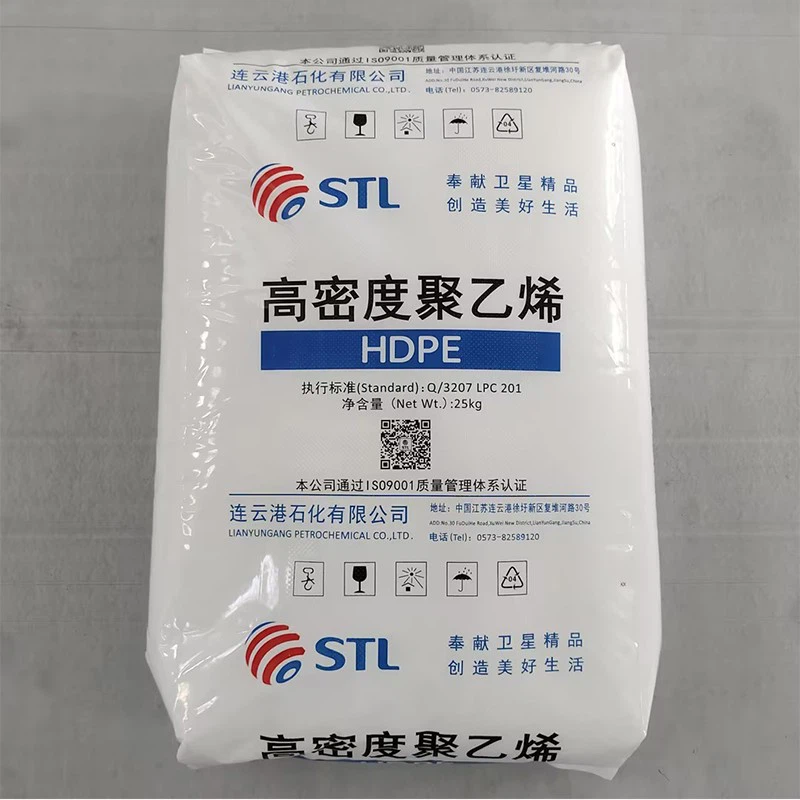
Pipe 9002 - 88 - 4 is made from a specific type of polyethylene material. Polyethylene is generally known for its relatively low thermal conductivity compared to metals. The thermal conductivity of Pipe 9002 - 88 - 4 typically ranges from 0.3 to 0.5 W/(m·K). This value is quite low, which makes the pipe an excellent choice for applications where heat insulation is required.
For example, in a district heating system, pipes are used to transport hot water from the heat source to the consumers. If the pipes have a high thermal conductivity, a significant amount of heat will be lost during the transportation, resulting in energy inefficiency. With Pipe 9002 - 88 - 4, its low thermal conductivity helps to minimize heat loss, ensuring that more of the heat generated at the source reaches the end - users.

In addition, in cold storage facilities, where pipes are used to circulate refrigerants, the low thermal conductivity of Pipe 9002 - 88 - 4 helps to prevent heat from entering the system. This reduces the workload on the refrigeration equipment and saves energy.
Factors Affecting the Thermal Conductivity of Pipe 9002 - 88 - 4
Several factors can influence the thermal conductivity of Pipe 9002 - 88 - 4.
Material Composition
The exact formulation of the polyethylene used in Pipe 9002 - 88 - 4 can have an impact on its thermal conductivity. Different additives and fillers can be incorporated into the polyethylene matrix during the manufacturing process. Some additives may increase the thermal conductivity, while others may decrease it. For instance, adding carbon nanotubes can enhance the thermal conductivity of polyethylene, while adding glass fibers may have little effect or even slightly reduce it depending on the concentration.
Temperature
The thermal conductivity of Pipe 9002 - 88 - 4 is also temperature - dependent. Generally, as the temperature increases, the thermal conductivity of polyethylene materials tends to increase slightly. This is because at higher temperatures, the molecular motion becomes more active, which facilitates the transfer of heat. However, the change in thermal conductivity with temperature for Pipe 9002 - 88 - 4 is relatively small within the normal operating temperature range.
Density
The density of the pipe can also affect its thermal conductivity. Higher - density polyethylene usually has a slightly higher thermal conductivity than lower - density polyethylene. This is because the molecules in higher - density polyethylene are more closely packed, which allows for better heat transfer through molecular collisions.
Applications Based on Thermal Conductivity
The thermal conductivity properties of Pipe 9002 - 88 - 4 make it suitable for a wide range of applications.
Heating and Cooling Systems
As mentioned earlier, in heating and cooling systems, the low thermal conductivity of Pipe 9002 - 88 - 4 helps to maintain the temperature of the fluid inside the pipes. Whether it is hot water in a heating system or cold refrigerant in an air - conditioning system, the pipe can minimize heat exchange with the surrounding environment, improving the energy efficiency of the entire system.
Chemical and Food Industries
In the chemical and food industries, pipes are often used to transport fluids at specific temperatures. Pipe 9002 - 88 - 4 can be used to ensure that the temperature - sensitive chemicals or food products are transported without significant temperature changes. For example, in the production of dairy products, pipes are used to transport milk at a specific temperature to prevent spoilage. The low thermal conductivity of Pipe 9002 - 88 - 4 helps to maintain the desired temperature of the milk during transportation.
Comparison with Other Pipe Materials
When compared with other common pipe materials, Pipe 9002 - 88 - 4 has distinct advantages in terms of thermal conductivity.
Metal Pipes
Metals such as copper and steel have very high thermal conductivities. Copper has a thermal conductivity of about 400 W/(m·K), and steel has a thermal conductivity in the range of 15 - 50 W/(m·K). In contrast, the low thermal conductivity of Pipe 9002 - 88 - 4 makes it a better choice for applications where heat insulation is required. Metal pipes are more suitable for applications where rapid heat transfer is needed, such as in heat exchangers.
Other Plastic Pipes
Among plastic pipes, different materials also have different thermal conductivities. PVC pipes, for example, have a thermal conductivity of about 0.16 - 0.19 W/(m·K), which is slightly lower than that of Pipe 9002 - 88 - 4. However, Pipe 9002 - 88 - 4 has other advantages such as better chemical resistance and mechanical properties in some cases, which make it a preferred choice in certain applications.
Conclusion
The thermal conductivity properties of Pipe 9002 - 88 - 4 play a vital role in determining its suitability for various applications. Its relatively low thermal conductivity, in the range of 0.3 - 0.5 W/(m·K), makes it an excellent choice for applications where heat insulation is required. Factors such as material composition, temperature, and density can affect its thermal conductivity. When compared with other pipe materials, Pipe 9002 - 88 - 4 offers unique advantages in terms of energy efficiency and temperature control.
If you are interested in learning more about Pipe 9002 - 88 - 4 or are considering using it in your projects, please visit Pipe 9002 - 88 - 4 for more detailed product information. We also offer related products such as Film 9002 - 88 - 4 and Injection Molding(ES Fiber)9002 - 88 - 4. Feel free to contact us for procurement and further discussions.
References
- Incropera, F. P., & DeWitt, D. P. (2002). Fundamentals of Heat and Mass Transfer. John Wiley & Sons.
- Tester, J. W., & Modell, M. (1997). Thermodynamics and Its Applications. Prentice Hall.