

Satellite Chemical is a major producer of Polyethylene, Polystyrene and Ethylene Oxide Derivatives in China.
Our C2 products include:





-
![HPEG 31497-33-3]() HPEG 31497-33-3High water reducing rate, good enhancing effect and workability, environmentally friendly.. Has successfully completed the Registration of EU Reach Certificate.. Has acquired Turkish KKDİK PRE-SIEFread more
HPEG 31497-33-3High water reducing rate, good enhancing effect and workability, environmentally friendly.. Has successfully completed the Registration of EU Reach Certificate.. Has acquired Turkish KKDİK PRE-SIEFread more -
![TPEG 62601-60-9]() TPEG 62601-60-9Good slump retetion, good enhancing effect and workability, environmentally friendly.. Has successfully completed the Registration of EU Reach Certificate.. Has acquired Turkish KKDİK PRE-SIEFread more
TPEG 62601-60-9Good slump retetion, good enhancing effect and workability, environmentally friendly.. Has successfully completed the Registration of EU Reach Certificate.. Has acquired Turkish KKDİK PRE-SIEFread more -
![EPEG 77716-60-6]() EPEG 77716-60-6High water reducing rate,good slump retetion, good enhancing effect and workability, environmentally friendly.. Has successfully completed the Registration of EU Reach Certificate.. Has acquiredread more
EPEG 77716-60-6High water reducing rate,good slump retetion, good enhancing effect and workability, environmentally friendly.. Has successfully completed the Registration of EU Reach Certificate.. Has acquiredread more -
![HIPS (STL 88, STL 888GH) 9003-53-6]() HIPS (STL 88, STL 888GH) 9003-53-6High-Gloss High-Impact Polystyrene (HIPS). STL 88/STL 888GH has obtained RoHS/FDA safety certification..read more
HIPS (STL 88, STL 888GH) 9003-53-6High-Gloss High-Impact Polystyrene (HIPS). STL 88/STL 888GH has obtained RoHS/FDA safety certification..read more -
![GPPS (STL 525, STL 535T) 9003-53-6]() GPPS (STL 525, STL 535T) 9003-53-6High transparency, strong toughness.. STL 525/STL 535T has obtained RoHS/FDA safety certification.. Has acquired Turkish KKDİK PRE-SIEF CERTIFICATE..read more
GPPS (STL 525, STL 535T) 9003-53-6High transparency, strong toughness.. STL 525/STL 535T has obtained RoHS/FDA safety certification.. Has acquired Turkish KKDİK PRE-SIEF CERTIFICATE..read more -
![Film (STL FS7000, STL FS1460H) 9002-88-4]() Film (STL FS7000, STL FS1460H) 9002-88-4Food-Grade Safety, Superior Processability. STL FS7000/FS 1460H has obtained RoHS/FDA safety certification.read more
Film (STL FS7000, STL FS1460H) 9002-88-4Food-Grade Safety, Superior Processability. STL FS7000/FS 1460H has obtained RoHS/FDA safety certification.read more -
![Pipe (STL 23050) 9002-88-4]() Pipe (STL 23050) 9002-88-4High strength, superior stress crack resistance, exceptional toughness. has obtained PE100 certification from the National Testing Center for Building Materials of Chemical Industry (February 2024).read more
Pipe (STL 23050) 9002-88-4High strength, superior stress crack resistance, exceptional toughness. has obtained PE100 certification from the National Testing Center for Building Materials of Chemical Industry (February 2024).read more -
![Blow Molding (STL BL3M) 9002-88-4]() Blow Molding (STL BL3M) 9002-88-4Exceptional Hardness,Superior Fluidity & Gloss for Molding. STL BL3M has obtained RoHS/FDA safety certification.read more
Blow Molding (STL BL3M) 9002-88-4Exceptional Hardness,Superior Fluidity & Gloss for Molding. STL BL3M has obtained RoHS/FDA safety certification.read more -
![MEG CAS:107-21-1]()
-
![DEG CAS:111-46-6]()
-
![TEG CAS:112-27-6]()
-
![Mono Ethanolamine 141-43-5]() Mono Ethanolamine 141-43-5It is used as emulsifier for cosmetics, foaming agent. minimal impurities make the product suitable for skin contact applications.read more
Mono Ethanolamine 141-43-5It is used as emulsifier for cosmetics, foaming agent. minimal impurities make the product suitable for skin contact applications.read more


Chemical makes a better life.
Innovative, low-carbon & advanced materials.
Green tech, reliable products & global standards.
Integrated C2/C3 chains for new energy, electronics, healthcare.
Primary products include:
C3:
Acrylic Acid(AA, GAA)
Butyl Acrylate(BA)
2-Ehyihexyl Acryiate(2-EHA)
Ethyl Acrylate(EA)
Methyl Acrylate(MA)
n-Butanol(nBuoh)
Isooctyl Alcohol(2-EH)
Neopentyl Glycol (NPG)
Propylene Oxide(PO)
C2:
Polyethylene(HDPE)
Polystyrene(PS)
Ethylene Glycol(MEG, DEG, TEG)
Polyether-monomers(HPEG, TPEG, EPEG)
Ethanolamine(MEA, DEA,TEA)
Polyethylene-glycol(PEG)
Styrene(SM)
Satellite Chemical's C2 product line, which includes High-Density Polyethylene (HDPE), Ethylene Oxide (EO), and Ethylene Glycol (EG), offers a range of benefits that make these materials essential in various industrial applications.
- Cost-Effective: HDPE is an affordable material that provides a balance of performance and affordability, making it a popular choice for a wide range of applications.
- Durability: It is known for its high tensile strength and impressive strength-to-density ratio, which allows it to withstand heavy loads and harsh conditions.
- Chemical and Moisture Resistance: HDPE is resistant to a wide range of chemicals, including water, solvents, acids, detergents, and cleaning solutions, making it ideal for use in chemical containers and food and beverage packaging.
- UV Resistance: HDPE is UV-resistant, which helps prevent discoloration and degradation when exposed to sunlight, making it suitable for outdoor applications such as toys and pipe systems.
- Recyclability: HDPE is fully recyclable, contributing to sustainability efforts and reducing environmental impact.
- Broad-Spectrum Efficacy: EO is highly effective against a wide range of microorganisms, including bacteria, viruses, fungi, and bacterial spores, making it a preferred choice for sterilizing medical devices and pharmaceutical products.
- Material Compatibility: EO sterilization is compatible with a wide range of materials, including those sensitive to heat and moisture, such as electronic components and plastics. This versatility allows for the sterilization of complex medical devices without compromising their integrity.
- Effective Penetration: EO can effectively penetrate complex product configurations, ensuring that all areas of a device are sterilized, even in challenging locations.
- Antifreeze Properties: EG is widely used as an antifreeze agent in automotive and industrial applications, providing freeze protection and improving the performance of cooling systems.
- Polyester Production: EG is a key component in the production of polyester fibers, which are used in textiles, clothing, and other consumer products. Its chemical properties make it an essential raw material for the polyester industry.
- Low Volatility and High Boiling Point: EG has a low volatility and high boiling point, which makes it suitable for applications requiring thermal stability and freeze protection.
These C2 products, produced with advanced technology and rigorous quality control, offer significant advantages in terms of performance, durability, and environmental impact, making them valuable components in various industrial and consumer applications. Satellite Chemical's commitment to innovation and sustainability ensures that these products meet the highest standards of quality and reliability.
The production processes of Satellite Chemical's C2 products mainly include the following aspects:
High-Density Polyethylene (HDPE)
Production Process: Satellite Chemical uses LyondellBasell's Hostalen ACP process technology to produce HDPE, employing Ziegler-Natta catalysts with butene as the comonomer, capable of producing both single-peak and multi-peak products. Single-peak products feature a narrow molecular weight distribution, high melt strength, easy processing, and good mechanical properties; multi-peak products have a broad molecular weight distribution, offering balanced processing and mechanical properties, especially the distribution of comonomers on the high molecular chain, which endows hollow, pipe, and film products with excellent mechanical properties and resistance to environmental stress cracking.
Ethylene Oxide (EO) and Ethylene Glycol (EG)
Production Process: Satellite Chemical adopts the EO ester exchange process route to produce DMC (dimethyl carbonate), which has environmental advantages and is characterized by mature technology, mild reaction conditions, low equipment investment, high production safety, high reaction efficiency, and high product purity. The company's complete industrial chain, with EO production capacity leading among domestic private enterprises, effectively alleviates upstream cost pressures. Moreover, the company utilizes high-purity ethane (purity over 99%) to produce downstream products with high purity requirements. Producing 1 ton of DMC results in a by-product of 0.6 tons of ethylene glycol, increasing the company's revenue.
Ethane Cracking to Ethylene
Production Process: Satellite Chemical produces ethylene through ethane cracking, establishing an ethane import channel and constructing ethane cracking ethylene facilities to obtain low-cost ethylene raw materials. On this basis, the company has also built functional chemicals and high molecular new materials such as high-density polyethylene (HDPE), styrene, ethylene oxide, ethylene glycol, acrylonitrile, and polyether macro monomers.
Satellite Chemical's C2 products, including High-Density Polyethylene (HDPE), Ethylene Oxide (EO), and Ethylene Glycol (EG), benefit from advanced production processes that enhance quality, efficiency, and sustainability.
In summary, Satellite Chemical's C2 processes deliver high-quality, cost-effective products with a minimized environmental impact, leveraging advanced technologies and strategic raw material sourcing.
Satellite Intemation Chemical is a world-leading acrylic acid producer and one of the few large- scale producers of acrylic acid and esters, polymer emulsions and functional polymer materials in China with a full industrial chain.
The primary products include ethylene glycol, ethanolamine, styrene, epoxide, acrylic acid, and acrylate.
Why Choose us
Strong Team
The company currently has 240 R&D team members and 100 scientific and technological R&D personnel,including 20 with doctoral degrees and above and 50 with intemediate professional ttles and above, fom-ing a well. structured and comprehensive R&D team.
Development and Innovation
In accordance with the strategic layout of the C2 and C3 dual industrial chains, the company continuously drives technological and service innovations. It is dedicated to becoming China's premier diversified chemical enterprise, focusing on technology and services.
Commitment to Quality Service
Our dedicated customer service team is available around the clock to address any questions or concerns you may have via multiple communication channels. We assure that all inquiries and feedback will receive a timely response within 24 hours.
The C2 chemical produced by our company mainly include the following types:
Polyethylene Glycol 6000
PEG 6000 is a high molecular-weight grade of polyethylene glycol. It is a white solid at room temperature with low volatility, low ash content, and slightly hygroscopic.
General Purpose Polystyrene (GPPS) 9003-53-6
Polystyrene is a polymerization product of styrene (vinyl benzene), thermoplastic polymer of linear structure.
HPEG 31497-33-3
This product is prepared by the addition of methyl Allyl alcohol and ethylene oxide. It is an important raw material of a new generation of polycarboxylic acid water reducer. It is initiated and copolymerized with acrylic acid and other free radicals to form a copolymer as a terminal hydrophilic group to improve the hydrophilicity and dispersion of the polymer in water.
Propylene Oxide 75-56-9
Propylene oxide is an acutely toxic and carcinogenic organic compound with the molecular formula CH3CHCH2O. This colorless volatile liquid with an odor similar to ether, is produced on a large scale industrially. Its major application is its use for the production of polyether polyols for use in making polyurethane plastics. It is a chiral epoxide, although it is commonly used as a racemic mixture.
Mono Ethanolamine 141-43-5
As an absorbent for acid gases (e.g., hydrogen sulfide, carbon dioxide, etc.) In liquefied petroleum gas, natural gas, and other gases absorbent. It is the raw material for synthesizing pharmaceuticals, pesticides, dye intermediates and surfactants. It is also used as emulsifier for cosmetics, foamer. It is also used as emulsifier for cosmetics, foaming agent, anti-moth agent for fabrics, auxiliary agent for printing ink, whitening agent for printing and dyeing, plasticizer for synthetic resin, vulcanizing agent for rubber, anti-static agent and so on Agent, antistatic agent and so on.

|
INSPECTION ITEMS |
TYPICAL VALUES |
UNITS |
TEST METHODS |
|
Appearance(25°C) |
White flaky solid |
/ |
Visual |
|
Hydroxyl Value (As KOH) |
26.8-29.4 |
mg/g |
GB/T7383-2020 |
|
PH(5% Aqueous Solution) |
5.0-7.0 |
/ |
GB/T6383-2008 |
|
Average Molecular Weight |
3820-4180 |
/ |
HG/T4134-2022 |
Features of C2 Chemical

Polyethylene Glycol 6000
Polyethylene glycol 6000 have many features, including:
PEG 6000 is a high molecular-weight grade of polyethylene glycol. It is a white solid at room temperature with low volatility, low ash content, and slightly hygroscopic.
PEG 6000 is recommended as a formulation aid and chemical intermediate for use in cosmetic formulations, water soluble lubricants, mould release agents, antistatic agents, humectants, plasticizers, carriers, wood treatment, as co-solvent and solubilizing aid in detergent and agrochemical formulations, and synthesis of esters.
PEG 6000 shows good lubricity and is recommended as a component in lubricants for textile and rubber industry.
PEG 6000 reacts with fatty acids to form esters and dibasic acids to form polyester based lubricants, and may be used as an intermediate to form water dispersible resins for coating applications.
General Purpose Polystyrene (GPPS) 9003-53-6
General purpose polystyrene (GPPS) 9003-53-6 have many advantages, including:
General Purpose Polystyrene (GPPS) is a transparent, rigid, and lightweight thermoplastic polymer. It has a specific gravity of 1.05 g/cm³ and a refractive index of 1.59. GPPS is highly resistant to moisture and has good electrical insulation properties. It is commonly used in applications that require good dimensional stability and transparency, such as packaging, office supplies, and household items.
GPPS is a brittle material with low-impact strength. It has a tensile strength of 50-60 MPa and a flexural modulus of 2,200-2,500 MPa. GPPS has excellent moldability and can be easily processed using injection molding, extrusion, or foam molding techniques. However, due to its low-impact strength, GPPS is not suitable for applications that require high impact resistance.
GPPS has a glass transition temperature (Tg) of 85-105°C and a melting temperature (Tm) of 200-240°C. It has a heat deflection temperature (HDT) of 70-80°C under a load of 0.45 MPa. GPPS is a good insulator of heat and electricity and has a low coefficient of thermal expansion. However, it is not suitable for high-temperature applications due to its low thermal stability.

Storage and Handling
The product shall be stored in a ventilated, dry, clean warehouse with good fire-fighting facilities. During storage, it shall be kept away from the heat source and protected from direct sunlight. It shall not be stacked in the open air. The storage period of this product is 12 months from the date of production.
This product is non-hazardous. Sharp tools such as iron hooks shall not be used during transportation and loading and unloading, and throwing is prohibited. The transportation tools shall be kept clean and dry and equipped with car shed or tarpaulin. During transportation, it is not allowed to mix with sand, broken metal, coal and glass, nor with toxic, corrosive or flammable materials. The product shall not be exposed to sunlight or rain during transportation.
Packaging And Transportation
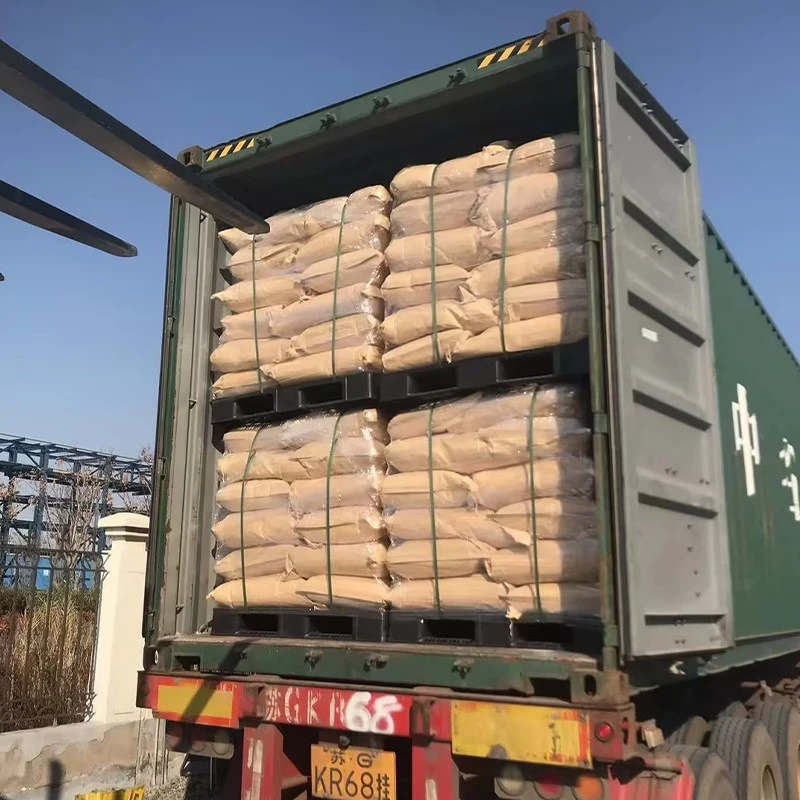
Packed in plastic woven bags with a net content of 25kg / bag.

FAQ
We're professional c2 chemical manufacturers and suppliers in China, specialized in providing high quality products and service. We warmly welcome you to wholesale customized c2 chemical at competitive price from our factory.