

Acrylic acid, a vital chemical compound with a wide range of applications in industries such as coatings, adhesives, and superabsorbent polymers, is produced through specific chemical processes. As a leading acrylic acid supplier, I understand the importance of not only providing high - quality products but also sharing in - depth knowledge about the production process. In this blog, we will delve into the side - reactions that occur during acrylic acid production.
The Main Production Routes of Acrylic Acid
There are primarily two methods for producing acrylic acid: the propylene oxidation method and the acrylonitrile hydrolysis method. The propylene oxidation method is the most commonly used approach on an industrial scale. It involves a two - step oxidation process of propylene. In the first step, propylene is oxidized to acrolein, and in the second step, acrolein is further oxidized to acrylic acid.
Side - Reactions in the First Step: Propylene to Acrolein
When propylene is oxidized to acrolein, several side - reactions can take place. One of the major side - reactions is the complete combustion of propylene. Propylene reacts with oxygen to form carbon dioxide and water instead of acrolein. This reaction is highly exothermic and can be represented by the following equation:
(C_3H_6+4.5O_2\rightarrow3CO_2 + 3H_2O)
The complete combustion reaction is undesirable because it reduces the yield of acrolein, the intermediate product for acrylic acid production. It also consumes a significant amount of propylene and oxygen, increasing the production cost.

Another side - reaction is the partial oxidation of propylene to acetaldehyde and formaldehyde. The equations for these reactions are as follows:
(C_3H_6+2O_2\rightarrow CH_3CHO+CO_2 + H_2O)
(C_3H_6+2.5O_2\rightarrow HCHO + 2CO_2+2H_2O)
These side - products not only reduce the acrolein yield but also pose challenges in the subsequent purification process. Acetaldehyde and formaldehyde have similar boiling points to acrolein, making it difficult to separate them efficiently.
Side - Reactions in the Second Step: Acrolein to Acrylic Acid
During the oxidation of acrolein to acrylic acid, side - reactions also occur. Similar to the first step, the complete combustion of acrolein can happen. The reaction equation is:
(C_3H_4O + 3.5O_2\rightarrow3CO_2+2H_2O)
This reaction leads to a loss of acrolein and reduces the overall yield of acrylic acid.
In addition, acrolein can undergo self - polymerization under certain conditions. The self - polymerization of acrolein forms oligomers or polymers, which can clog the reaction equipment and pipelines. This not only affects the normal operation of the production process but also requires frequent maintenance and cleaning, increasing the production cost and downtime.
Another side - reaction is the formation of maleic anhydride. Acrolein reacts with oxygen to form maleic anhydride through a series of complex reaction mechanisms. The presence of maleic anhydride in the product stream can affect the quality of acrylic acid, especially in applications where high - purity acrylic acid is required.
Impact of Side - Reactions on Acrylic Acid Production
The side - reactions in acrylic acid production have several negative impacts. Firstly, they reduce the yield of acrylic acid. As mentioned above, the complete combustion and formation of side - products consume raw materials and intermediate products, resulting in a lower overall production efficiency. This directly affects the economic viability of the production process.
Secondly, the side - products pose challenges in the purification process. Separation of side - products such as carbon dioxide, acetaldehyde, formaldehyde, maleic anhydride, and polymers from acrylic acid requires complex and energy - intensive purification steps. These purification processes increase the production cost and may also lead to additional losses of acrylic acid during the separation process.
Finally, the side - reactions can affect the quality of acrylic acid. The presence of impurities such as maleic anhydride and polymers can change the physical and chemical properties of acrylic acid, making it unsuitable for certain high - end applications.
Strategies to Minimize Side - Reactions
To minimize side - reactions in acrylic acid production, several strategies can be employed. One of the key strategies is the use of selective catalysts. Catalysts play a crucial role in promoting the main reactions and suppressing side - reactions. For example, in the propylene oxidation process, specific metal oxide catalysts can be used to selectively oxidize propylene to acrolein and then acrolein to acrylic acid. These catalysts have high selectivity and can reduce the occurrence of complete combustion and other side - reactions.
Another strategy is to optimize the reaction conditions. The reaction temperature, pressure, and reactant ratio can significantly affect the occurrence of side - reactions. By carefully controlling these parameters, the selectivity of the main reactions can be improved. For instance, lower reaction temperatures can reduce the probability of complete combustion reactions, while an appropriate reactant ratio can ensure the efficient conversion of raw materials to the desired products.
Regular maintenance and cleaning of the reaction equipment are also essential. This helps to prevent the accumulation of polymers and other by - products, which can cause blockages and affect the normal operation of the production process.
Our Acrylic Acid Products
As a reliable acrylic acid supplier, we are committed to providing high - quality acrylic acid products. We have advanced production technology and strict quality control measures to minimize the impact of side - reactions on our products. Our acrylic acid products are available in different packaging options to meet the diverse needs of our customers.
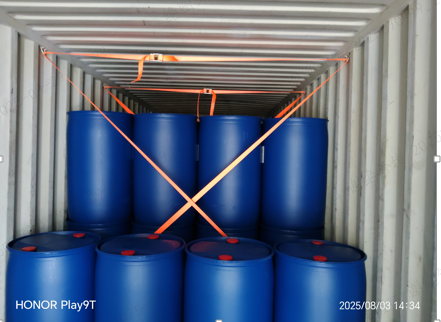
If you are looking for acrylic acid for large - scale vessel bulk shipments above 1000 tons, you can check our Acrylic Acid For Vessel Bulk Above 1000 Tons product page. For customers who prefer 40GP containers with drums and pallets, our Acrylic Acid For 40GP With Drums And Pallets is a suitable option. We also offer AA 79 - 10 - 7, which meets high - quality standards.
Contact Us for Procurement
If you are interested in our acrylic acid products and would like to discuss procurement details, please feel free to reach out to us. We have a professional sales team ready to provide you with comprehensive information and support. Whether you need a small - scale or large - scale supply, we can offer you competitive prices and reliable delivery services.
References
- Smith, J. A. (2018). Chemical Engineering of Acrylic Acid Production. New York: Chemical Press.
- Johnson, B. R. (2019). Catalysis in Acrylic Acid Synthesis. London: Catalysis Publications.
- Lee, C. K. (2020). Optimization of Reaction Conditions in Acrylic Acid Manufacturing. Tokyo: Chemical Industry Journal.