

Hey there! As an acrylic acid (AA) supplier, I've been getting a lot of questions lately about the flame-retardant properties of acrylic acid-based polymers. So, I thought I'd take a deep dive into this topic and share what I've learned.
First off, let's talk a bit about acrylic acid itself. Acrylic acid is a versatile chemical with the CAS number AA 79-10-7. It's used in a wide range of applications, from adhesives and coatings to superabsorbent polymers. When acrylic acid is polymerized, it forms acrylic acid-based polymers, which have some really interesting properties.
Now, onto the main question: what are the flame-retardant properties of acrylic acid-based polymers? Well, acrylic acid-based polymers don't have inherent strong flame-retardant characteristics. By themselves, they are flammable to some extent. But the good news is that there are ways to enhance their flame retardancy.
One common approach is to add flame retardants to the acrylic acid-based polymers during the manufacturing process. There are different types of flame retardants that can be used. For example, halogenated flame retardants were widely used in the past. They work by releasing halogen radicals when exposed to fire, which can interrupt the combustion chain reaction. However, due to environmental and health concerns, the use of some halogenated flame retardants has been restricted in recent years.
Another option is to use non - halogenated flame retardants. These include phosphorus-based flame retardants. Phosphorus compounds can form a protective char layer on the surface of the polymer when heated. This char layer acts as a barrier, preventing oxygen from reaching the polymer and reducing the release of flammable gases. It also helps to insulate the underlying polymer from the heat of the fire.
Nitrogen-based flame retardants are also gaining popularity. They can decompose at high temperatures and release nitrogen-containing gases, which dilute the oxygen concentration around the polymer and suppress the combustion process. Some nitrogen-based flame retardants can also cooperate with other flame retardants to achieve better flame-retardant effects.
The effectiveness of these flame retardants in acrylic acid-based polymers depends on several factors. The type and amount of flame retardant added are crucial. If too little flame retardant is used, the improvement in flame retardancy may be minimal. On the other hand, adding too much can affect the mechanical and physical properties of the polymer, such as its strength, flexibility, and transparency.
The processing conditions during the addition of flame retardants also matter. For example, the mixing temperature, time, and shear rate can influence how well the flame retardant is dispersed in the polymer matrix. A good dispersion is essential for achieving uniform flame-retardant performance throughout the polymer.
In addition to adding flame retardants, the structure of the acrylic acid-based polymer itself can also be modified to improve flame retardancy. For instance, copolymerizing acrylic acid with other monomers that have flame-retardant properties can be an effective strategy. Some monomers contain elements like silicon or boron, which can contribute to the formation of a more stable char layer or have other flame-retardant mechanisms.

Now, let's talk about the applications of flame-retardant acrylic acid-based polymers. They are widely used in the construction industry. For example, in building insulation materials. Flame-retardant acrylic acid-based polymers can help reduce the risk of fire spreading in buildings. They can also be used in electrical and electronic products. In these applications, the polymers need to meet certain flammability standards to ensure the safety of the equipment and the users.
In the automotive industry, flame-retardant acrylic acid-based polymers are used in interior components such as seat covers and dashboard materials. This helps to enhance the fire safety of vehicles.
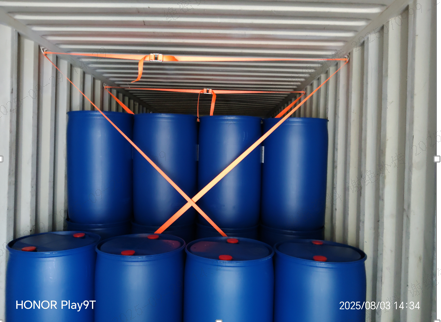
If you're in the market for acrylic acid for your polymer manufacturing needs, we offer different packaging options. We have Acrylic Acid For 20GP With Drums And Pallets, which is great for smaller - scale operations or when you need more flexibility in transportation. And for larger - scale projects, we also provide Acrylic Acid For Vessel Bulk Above 1000 Tons.
Whether you're looking to improve the flame retardancy of your acrylic acid-based polymers or just need high - quality acrylic acid for other applications, we're here to help. If you have any questions or want to start a procurement discussion, feel free to reach out. We can provide you with detailed product information and work with you to find the best solutions for your specific needs.
In conclusion, while acrylic acid-based polymers aren't naturally highly flame - retardant, with the right strategies such as adding appropriate flame retardants and modifying the polymer structure, their flame retardancy can be significantly improved. This makes them suitable for a wide range of applications where fire safety is a concern.
References
- “Flame Retardancy of Polymers: New Strategies and Mechanisms” by Horrocks, A. R.
- “Handbook of Flame Retardancy” by Weil, E. D. and Levchik, S. V.