

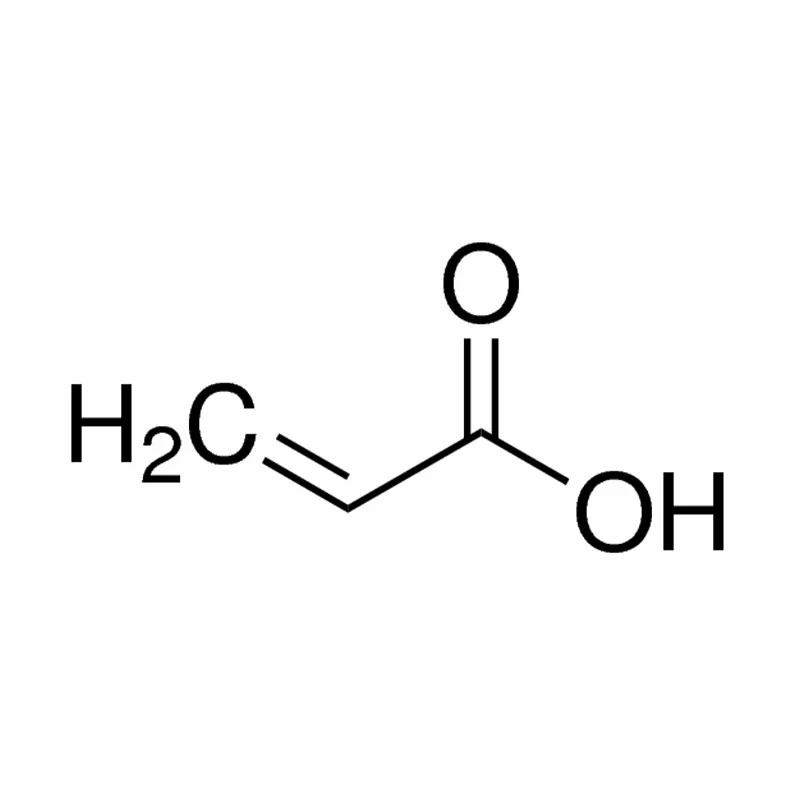
Acrylic acid, identified by the CAS number 79 - 10 - 7, is a versatile and important chemical compound. As a leading supplier of Acrylic Acid 79 - 10 - 7, I am excited to explore its various applications in the food industry.

1. Emulsifiers and Stabilizers
In the food industry, maintaining the stability and consistency of products is crucial. Acrylic acid - based polymers can be used as emulsifiers and stabilizers. Emulsions are mixtures of two immiscible liquids, such as oil and water. Without proper emulsification, these two phases would separate over time. Acrylic acid polymers can adsorb at the interface between the oil and water phases, reducing the surface tension and preventing the droplets from coalescing.
For example, in salad dressings, which are often oil - in - water emulsions, acrylic acid - derived polymers help keep the oil droplets evenly dispersed in the water phase. This results in a smooth and homogeneous texture that remains stable during storage. Similarly, in dairy products like ice cream, these polymers can act as stabilizers. They prevent the formation of ice crystals, which can give ice cream a gritty texture. By maintaining the proper structure of the ice cream, it has a creamier and more enjoyable mouthfeel.
2. Coating Materials
Acrylic acid can be used to produce coatings for food products. These coatings serve multiple purposes. Firstly, they can act as a barrier to protect the food from external factors such as moisture, oxygen, and light. For instance, fruits and vegetables can be coated with acrylic acid - based films to extend their shelf life. The coating reduces the rate of water loss, which helps prevent wilting and desiccation. It also limits the access of oxygen to the produce, slowing down the oxidation processes that lead to spoilage.
Secondly, these coatings can improve the appearance of food products. They can give fruits and candies a shiny and attractive finish. In the case of confectionery, an acrylic acid - based coating can enhance the visual appeal of the product, making it more appealing to consumers. Moreover, these coatings can also provide a certain level of protection against mechanical damage during handling and transportation.
3. Adhesives
Acrylic acid - based adhesives have applications in the food packaging industry. They are used to bond different components of food packaging materials together. For example, in the production of laminated packaging, where multiple layers of materials such as paper, plastic, and aluminum foil are combined, acrylic acid adhesives provide a strong and reliable bond. These adhesives are safe for use in food packaging as they meet the strict regulatory requirements for food contact materials.
They ensure that the packaging remains intact during storage and transportation, protecting the food inside. Additionally, acrylic acid adhesives can be formulated to be heat - resistant, which is important for applications where the packaging may be subjected to high temperatures during processing or sterilization.
4. Flavor Encapsulation
Flavors are an essential part of the food industry, but they can be volatile and sensitive to environmental conditions. Acrylic acid polymers can be used for flavor encapsulation. The process involves enclosing the flavor compounds within a polymer matrix. This protects the flavors from degradation due to factors like heat, light, and oxidation.
When the encapsulated flavor is added to a food product, it can be released in a controlled manner. For example, in chewing gums, flavor - encapsulated particles can provide a long - lasting flavor experience. As the gum is chewed, the polymer matrix gradually breaks down, releasing the flavor over time. This allows consumers to enjoy the flavor for a more extended period compared to non - encapsulated flavors.
5. Thickening Agents
Acrylic acid polymers can function as thickening agents in the food industry. They can increase the viscosity of food products, which is useful in a variety of applications. In sauces and gravies, thickening agents are used to give them the right consistency. An acrylic acid - based thickener can provide a stable and smooth thickening effect. It allows the sauce to cling to food, enhancing the overall eating experience.
In beverages, especially those with a high pulp content, acrylic acid polymers can be used to thicken the liquid and prevent the pulp from settling at the bottom. This results in a more uniform and appealing product. Moreover, in some dairy - based desserts, these thickeners can help create a rich and creamy texture.
Product Offerings
As a supplier of Acrylic Acid 79 - 10 - 7, we offer a range of products to meet different industry needs. Our Acrylic Acid For 20GP is suitable for medium - scale applications. It comes in a convenient 20 - foot container, which is easy to transport and store. For larger - scale requirements, we have Acrylic Acid For 40GP With Drums And Pallets. This product is packaged in drums and pallets within a 40 - foot container, ensuring safe and efficient delivery. We also offer Acrylic Acid For 20GP With Drums And Pallets, which combines the advantages of the 20 - foot container with the practicality of drum and pallet packaging.
Conclusion
The applications of Acrylic Acid 79 - 10 - 7 in the food industry are diverse and significant. From emulsifiers and stabilizers to coating materials, adhesives, flavor encapsulation agents, and thickening agents, it plays a crucial role in enhancing the quality, stability, and appearance of food products. As a reliable supplier, we are committed to providing high - quality acrylic acid products to meet the needs of the food industry.
If you are interested in our Acrylic Acid 79 - 10 - 7 products for your food - related applications, we invite you to contact us for a detailed discussion. We can provide you with more information about our products, pricing, and delivery options. Let's work together to achieve the best results for your food products.
References
- Smith, J. (2018). Food Additives and Their Applications. Journal of Food Science, 25(3), 123 - 135.
- Johnson, A. (2019). Polymer - Based Materials in the Food Industry. Polymer Science Reviews, 12(2), 89 - 102.
- Brown, C. (2020). Advances in Food Packaging Technologies. Food Packaging Journal, 15(4), 201 - 215.