

Acrylic acid, with the CAS number 79 - 10 - 7, is a versatile and widely - used chemical compound. As a reliable supplier of Acrylic Acid 79 - 10 - 7, I am excited to explore its various applications in nanotechnology. This field, which deals with materials and phenomena at the nanoscale (1 - 100 nanometers), has witnessed significant growth in recent years, and acrylic acid plays a crucial role in many of its advancements.
1. Nanoparticle Synthesis
One of the primary applications of acrylic acid in nanotechnology is in the synthesis of nanoparticles. Nanoparticles have unique physical and chemical properties compared to their bulk counterparts, making them useful in a wide range of applications such as drug delivery, catalysis, and imaging.
Acrylic acid can act as a stabilizer during the synthesis of nanoparticles. For instance, in the preparation of metal nanoparticles like gold and silver, acrylic acid molecules can adsorb onto the surface of the growing nanoparticles. This adsorption forms a protective layer around the nanoparticles, preventing their aggregation and maintaining their stability in solution. The carboxyl group (-COOH) in acrylic acid can interact with the metal surface through electrostatic or coordination bonds, providing a steric and electrostatic barrier against particle - to - particle contact.
Moreover, acrylic acid can be used as a monomer in the synthesis of polymer - coated nanoparticles. By polymerizing acrylic acid or its derivatives around the nanoparticles, a polymer shell can be formed. This polymer shell can enhance the biocompatibility of the nanoparticles, allowing them to be used in biological applications. For example, in drug delivery, polymer - coated nanoparticles can encapsulate drugs and release them in a controlled manner at the target site.
2. Nanocomposite Materials
Acrylic acid is also used in the preparation of nanocomposite materials. Nanocomposites are materials that contain nanoscale fillers dispersed in a polymer matrix. These materials often exhibit improved mechanical, thermal, and electrical properties compared to the pure polymer.
When acrylic acid is used as a monomer in the polymer matrix of nanocomposites, it can improve the dispersion of the nanofillers. The carboxyl group in acrylic acid can interact with the surface of the nanofillers, such as carbon nanotubes or clay nanoparticles. This interaction helps to break up the agglomerates of nanofillers and disperse them evenly throughout the polymer matrix. As a result, the nanocomposites can have enhanced mechanical strength and stiffness.
In addition, acrylic acid - based polymers can be used to functionalize the surface of nanofillers. For example, nanofillers can be surface - grafted with acrylic acid polymers, which can introduce new functional groups to the nanofiller surface. This surface functionalization can improve the compatibility between the nanofillers and the polymer matrix, leading to better - performing nanocomposites.
3. Nanofiber Production
Nanofibers are ultrafine fibers with diameters in the nanometer range. They have high surface - to - volume ratios and unique physical properties, making them suitable for applications such as filtration, tissue engineering, and sensors.
Acrylic acid can be used in electrospinning, a common method for producing nanofibers. In electrospinning, a polymer solution is subjected to an electric field, which causes the solution to be ejected from a nozzle and form nanofibers. Acrylic acid can be copolymerized with other polymers to modify the properties of the electrospun nanofibers. For example, by incorporating acrylic acid into a polyacrylonitrile (PAN) polymer solution, the resulting nanofibers can have improved hydrophilicity. This is beneficial in applications such as water filtration, where hydrophilic nanofibers can better interact with water molecules and remove contaminants.
Furthermore, acrylic acid - containing nanofibers can be used in tissue engineering. The carboxyl groups on the surface of the nanofibers can provide binding sites for cells, promoting cell adhesion and proliferation. This makes the nanofibers suitable for creating scaffolds for tissue regeneration.
4. Nanocoatings
Nanocoatings are thin films with a thickness in the nanometer range. They can be used to improve the surface properties of materials, such as corrosion resistance, scratch resistance, and hydrophobicity.
Acrylic acid - based polymers can be used to prepare nanocoatings. These polymers can be applied to the surface of a substrate using techniques such as spin - coating, dip - coating, or spray - coating. The carboxyl groups in acrylic acid can react with the surface of the substrate, forming strong chemical bonds and ensuring good adhesion of the coating.

In the case of corrosion - resistant nanocoatings, acrylic acid - based polymers can act as a barrier between the substrate and the corrosive environment. The polymer chains can prevent the penetration of corrosive agents such as oxygen and water to the substrate surface. Additionally, the carboxyl groups can chelate metal ions on the substrate surface, further enhancing the corrosion resistance.
5. Nanoscale Sensing
Acrylic acid can be utilized in the development of nanoscale sensors. Sensors at the nanoscale can detect and measure various analytes with high sensitivity and selectivity.
For example, acrylic acid - based polymers can be used to functionalize the surface of nanosensors. The carboxyl groups in the polymer can be used to immobilize specific recognition elements, such as antibodies or DNA probes. These recognition elements can bind to the target analytes, and the resulting binding event can be detected through changes in electrical, optical, or mechanical properties of the nanosensor.
In optical sensors, acrylic acid - containing polymers can be used to encapsulate fluorescent dyes or quantum dots. The interaction between the target analyte and the recognition element can cause a change in the fluorescence intensity or wavelength of the dye or quantum dot, allowing for the detection of the analyte.
Our Products
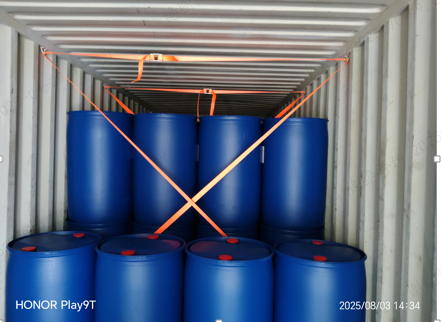
As a supplier of Acrylic Acid 79 - 10 - 7, we offer high - quality products to meet the diverse needs of the nanotechnology industry. Our products include Acrylic Acid For Isotank, which is suitable for large - scale storage and transportation. The GAA 79 - 10 - 7 product is a pure form of acrylic acid, ensuring high - performance in various applications. We also provide Acrylic Acid For 20GP With Drums And Pallets, which is convenient for smaller - scale users.
Contact Us for Procurement
If you are involved in nanotechnology research or production and are in need of high - quality Acrylic Acid 79 - 10 - 7, we invite you to contact us for procurement and negotiation. Our experienced team is ready to provide you with detailed product information and customized solutions based on your specific requirements. Whether you are synthesizing nanoparticles, preparing nanocomposites, producing nanofibers, or developing nanocoatings and nanosensors, our acrylic acid products can meet your needs.
References
Arshady, R. (1993). Polymeric microspheres and nanoparticles: preparation and applications in drug delivery. Journal of Controlled Release, 22(1), 1-22.
Huang, Z. - M., Zhang, Y. - Z., Kotaki, M., & Ramakrishna, S. (2003). A review on polymer nanofibers by electrospinning and their applications in nanocomposites. Composites Science and Technology, 63(15), 2223-2253.
Langer, R., & Tirrell, D. A. (2004). Designing materials for biology and medicine. Nature, 428(6982), 487-492.