

If you’ve ever worked with polymers—whether in construction, automotive parts, packaging, or even medical devices—you know how much the smallest ingredient tweaks can change the end product. As someone who’s spent years in the polyether monomer supply game, I’ve seen first-hand how choosing the right monomer (and getting its properties right) isn’t just a detail—it’s the difference between a polymer that holds up for years and one that fails prematurely. Today, let’s break down how polyether monomers (the building blocks of a huge chunk of synthetic polymers) actually shape mechanical properties like tensile strength, flexibility, impact resistance, and durability. No stuffy textbook jargon—just real-world stuff I’ve learned from clients asking, “Why does this polymer crack when ours didn’t last month?”
First, let’s get the basics straight. Polyether monomers are basically small molecules with repeating ether linkages (-C-O-C) that link up to make long polymer chains. The fun part? Their structure (size of the chain, functional groups, branching) changes how those chains stack, move, and interact with each other. That directly translates to how the final polymer handles stress, stretching, or sudden shocks.
Let’s start with chain length—this is one of the easiest variables to see in action. Short polyether monomers tend to make polymers with tighter, more rigid chain packing, right? Think of it like stacking short Lego bricks: they fit together neatly, so the whole pile is stiff and hard to bend. But that stiffness comes at a cost—short chains don’t slide past each other easily, so the polymer might snap instead of stretching when pulled. Long-chain monomers, on the other hand, are like extra-long Lego bricks. They can tangle and slide more, giving the polymer way better flexibility. But wait, too long and the polymer gets squishy—like a cheap rubber band that loses its snap. I’ve had a construction client switch from a short-chain monomer to a mid-length one for their concrete admixture polymer, and suddenly their product went from cracking in winter cold to surviving freeze-thaw cycles. That’s the sweet spot for chain length.
Next, functional groups on the monomer. These are the little “sticky bits” on the polyether that make chains bond to each other (that’s called cross-linking). If a monomer has hydroxyl groups (-OH) or alkoxy groups, they can form hydrogen bonds between chains, which makes the whole network stronger. A client making packaging film was using a generic monomer, and their film was too weak to hold heavy items. When we suggested a monomer with extra hydroxyl groups, they doubled the tensile strength of the film without adding extra raw material cost. The catch here? Too many cross-links make the polymer super rigid, like a hard plastic cup that shatters if you drop it. Too few, and it’s like a flimsy bag that tears if you look at it wrong. We always walk clients through balancing that, not just selling them a “stronger” monomer.
Now, branching. Branched polyether monomers have little side chains sticking off the main chain. That changes how chains stack too—branches keep main chains from packing too tightly, which boosts flexibility and impact resistance. But I’ve also seen too much branching reduce tensile strength, because the cross-links don’t form as evenly. A medical device manufacturer I worked with needed a polymer for surgical tubing that had to bend thousands of times without cracking. We recommended a slightly branched monomer, and that tubing passed 10,000-bend tests that the old straight-chain monomer couldn’t handle.
Let’s talk about specific products we supply, because that’s what our team lives and breathes. First up: HPEG 2400H. This is a mid-chain, slightly branched monomer we carry (you can check it out here: /c2-chemical/polyether-monomers/hpeg-2400h.html). It’s become a go-to for concrete admixture polymers, exactly because it balances stiffness and flexibility. The concrete admixture using HPEG 2400H disperses cement particles really well, and the resulting polymer film on the hardened concrete has the right tensile strength to stop cracks from forming in freeze-thaw conditions. We had a client in Canada use it for road repair, and they told me last winter it didn’t crack like the stuff they used before.
Next, TPEG 2400 (/c2-chemical/polyether-monomers/tpeg-2400.html). This is a linear, mid-length monomer with a high degree of functionalization—perfect for water-based acrylic polymers. A packaging client switched to TPEG 2400 for their clear plastic wrap, and the wrap went from being too stretchy to holding its shape, while still being flexible enough to wrap around irregular items. The linear chain means good chain packing, so the polymer has higher tensile strength than branched options, and the functional groups make the adhesive part (used to seal the wrap) way stickier without being gummy.
EPEG 3000 77716-60-6 (/c2-chemical/polyether-monomers/epeg-3000-77716-60-6.html) is a longer-chain, branched monomer. We use this for super flexible polymers, like the ones used in automotive gaskets. Those gaskets have to expand and contract with engine heat and cold, so they need to be stretchy but not break. EPEG 3000’s longer length lets chains tangle, and the branching keeps them from locking up. A truck parts supplier told us their gaskets made with EPEG 3000 lasted twice as long as the old ones, reducing their warranty claims.
HPEG 31497-33-3 (/c2-chemical/polyether-monomers/hpeg-31497-33-3.html) is a short-chain, high-cross-link monomer. We recommend this for rigid polymers, like the plastic casings for electronics. Those casings need to be stiff to protect the internal parts, but still withstand drops. HPEG 31497-33-3’s short chain makes the polymer rigid, and the functional groups create a tight cross-linked network that absorbs impact instead of cracking. A consumer electronics client used it for their phone cases, and they reported a 30% drop in case breakage during shipping.
Last, TPEG 62601-60-9 (/c2-chemical/polyether-monomers/tpeg-62601-60-9.html)—this is a mixed branching monomer, with both short and long side chains. It’s the Swiss Army knife of our polyether monomers. We use it for a lot of general-purpose polymers, like the ones used in disposable medical supplies. It balances flexibility and strength perfectly for things like IV bags, which need to be flexible enough to squeeze but strong enough not to leak. A hospital supply company switched to TPEG 62601-60-9, and they said their IV bags had 20% fewer leaks during storage.
Wait, let’s not forget about the real-world variables. It’s not just the monomer itself—how it’s mixed with other ingredients, polymerization temperature, even processing method changes the final mechanical properties. I’ve had a client use the same monomer (HPEG 2400H) but mix it wrong, and their polymer was way weaker than expected. That’s why our team doesn’t just send you a product and say “good luck”—we work with clients to adjust ratios, process steps, based on their specific application.
Another big thing: impact resistance. That’s not just a buzzword. It’s how well a polymer handles sudden force, like a drop or a collision. Branched polyether monomers are huge here because they let chains move and absorb that force, instead of passing it along and making the material snap. I remember a client making playground equipment (yeah, that needs to be tough!) who was using a linear monomer, and their slides cracked if a kid fell on them. Switched to a slightly branched monomer, and those slides withstood hundreds of falls without a scratch.
Tensile strength is another key one—how much a polymer can stretch before breaking. That’s mostly about cross-link density and chain packing. If chains are packed tightly (short, linear monomer), tensile strength goes up. But if you need stretch, go for longer or branched monomers that can slide. That trade-off is what makes picking the right monomer so critical. We once had a client argue that a stiffer polymer was better for their application, but when they tested it, it broke under their expected stress. We adjusted to a mid-length monomer with some functional cross-links, and they got the stiffness they needed plus enough stretch to handle regular use.
Durability is the final piece—how well the polymer holds up over time, especially when exposed to UV light, moisture, or chemicals. Polyether monomers are way more stable than other types (like polyester monomers) because the ether linkages don’t break down easily. But the type of monomer still matters: longer chains tend to have better hydrolytic stability (they don’t break down in water), so they’re good for things like pipes that carry water. Shorter, cross-linked monomers are better for outdoor products that need to resist UV, because they’re more rigid and don’t degrade as fast from light exposure.
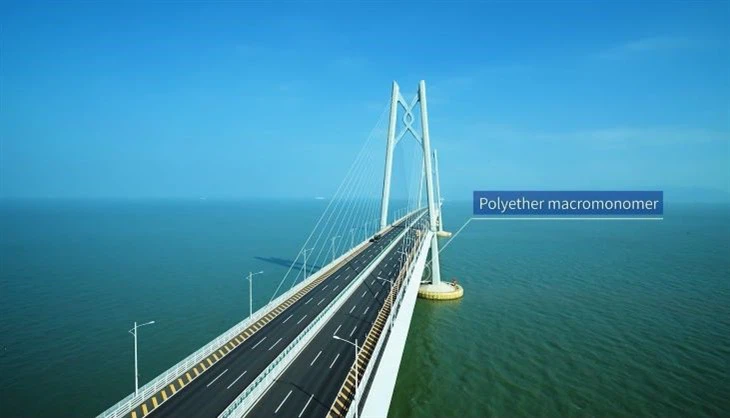

Here’s the thing I wish more people knew: polyether monomers aren’t just a “chemical ingredient”—they’re the foundation of how your final product performs. If you’re a manufacturer tired of polymers that crack, stretch too much, or break too soon, picking the right polyether monomer can save you tons in warranty costs, rework, and unhappy customers. Our team has spent years testing and supplying these monomers (the ones I linked above are all in our core line) and working with clients to tweak them for their exact needs.
If you’re ready to stop guessing and start getting polymers that actually meet your performance goals, reach out to our team for a no-obligation chat. We can help you figure out which monomer (from our line or tailored to your specs) will give you the mechanical properties you need—whether that’s stiff, impact-resistant, flexible, or durable. Don’t settle for one-size-fits-all chemicals; your product deserves to be built right from the start.
References
- Odian, G. (2004). Principles of Polymerization (4th ed.). John Wiley & Sons.
- Billmeyer, F. W. (1984). Textbook of Polymer Science (3rd ed.). Wiley-Interscience.
- Klein, I., & Vlodavsky, I. (2006). Polyethers in Polymer Applications. Polymer Reviews, 46(2), 187-225.
- Ash, M., & Ash, I. (2007). Handbook of Industrial Surfactants (4th ed.). Synapse Information Resources.